Showing posts with label World War I. Show all posts

Friday, June 19, 2015

This weekend on Masterpiece...

It is a BIG weekend on Masterpiece, y'all! I am SO EXCITED. Sunday night sees the premiere of both Poldark and The Crimson Field (FINALLY!).


Poldark, for those not in the know, is based on a series of Winston Graham novels detailing the life, loves, and dramas of Ross Poldark, a veteran of the Revolutionary War, recently returned to his home in Cornwall. This is the stuff of period drama GOLD, my friends! The original Poldark series from the 1970s, starring Robin Ellis (WHO ONCE TALKED TO ME ON TWITTER), was a breakout smash hit and helped launch the Masterpiece brand.

Earlier this month I started watching the first series of Classic Poldark and was immediately hooked. Trust me, people, do not let film quality or changes in filming styles put you off -- this is a drama that has HELD UP. And not only held up but still has the ability to shine and captivate new viewers (like yours truly) with its pacing, characterizations, and energy. I'm about a fourth of the way through the second series and it is just as fantastic!

I've also been reading the first novel, aptly entitled Ross Poldark, and I have a very serious question for the universe here: WHERE HAS THIS BOOK BEEN ALL MY LIFE? I cannot BELIEVE I am just NOW discovering these amazing, thoroughly entertaining stories! This first book was published in friggin' 1945...so it's been out there and I've (sadly) been living in a black hole of Poldark-deprivation. BUT NO MORE...and I am here to shout from the blogging rooftops that these stories are very much Ruth-approved! Seriously, if you love history, romance, intrigue, social commentary...this book has it all, and in SPADES. Go forth and read, my friends!

(Just because I can, here is the cover of the gorgeous, recently released Sourcebooks tie-in edition! Beautiful, no?)


Aidan Turner...SWOON. (I realize this is a controversial statement, but he was the best thing for me in the Hobbit films. *whew* I feel so much better now that that's out there...) ;-)

Here are a couple of trailers and clips:


I am so excited I can hardly stand it!!


Following Poldark we get the premiere of The Crimson Field, a six-part series following the lives of nurses on the fields of World War I. It's my understanding that this was originally envisioned as a multi-season series, but was not renewed...so hopefully it doesn't end on too much of a cliffhanger. But I think the subject matter is fascinating and the cast is fantastic, so I'm looking forward to checking this out. Here's a preview:


Enjoy! And watch (and read) ALL THE POLDARK THINGS. Totally worth it, promise. :)

Thursday, September 11, 2014

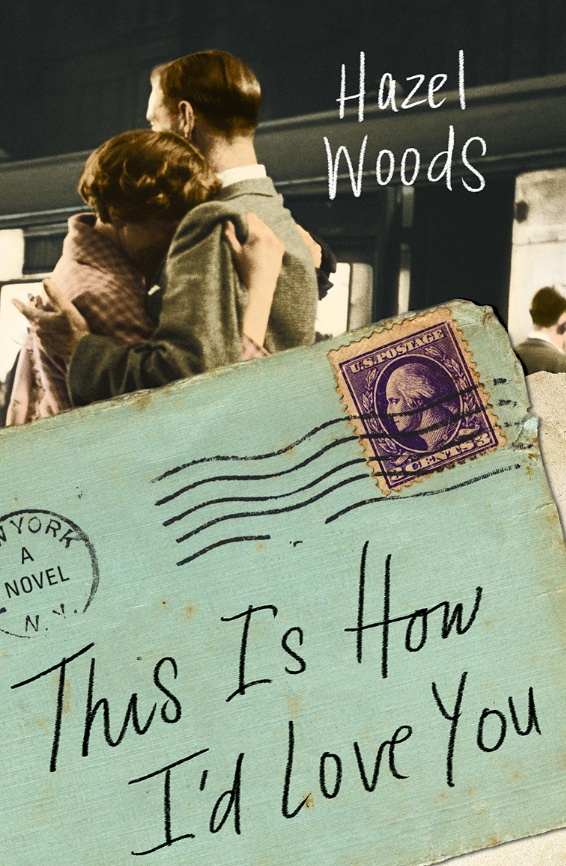
Review: This Is How I'd Love You by Hazel Woods


This Is How I'd Love You
By: Hazel Woods
Publisher: Plume
ISBN: 978-0-14-218148-5

Review:

Fresh from Harvard, Charles Reid is one of thousands of young men eager to be the first to enlist, the first to represent America at long last entering the Great War that has long been raging on the European continent. Desperately brave and desperate to matter, in his hunger for an anchor from home to ground him while overseas, Charles enrolls in a pen pal program seeking a chess partner, and is matched with Sacha Dench, a vehemently antiwar journalist. Dench is far from the type of patriot Charles was sure would seek to boost the morale of the boys overseas, but like his wealthy parents' disappointment in his choice of military service, he views Dench as a challenge. Desperate to prove his mettle and the rightness of his place in the world gone mad, Charles posts his response just prior to embarking for France. And thus the game is set, and the first volley of words is fired between two very disparate men whose mutual love of chess will spark a connection with staggering, unforeseen consequences.

Hensley, Sacha's only daughter and just seventeen, is shattered -- her heart broken and her life uprooted simultaneously, with an intensity and force that has left her reeling. Her future once so bright and assured, when her father loses his position at the newspaper thanks to his antiwar sentiments they are forced to accept the largess of a distant cousin and a job across the country, far from everything that defines home and comfort. Yet this loss is relatively minor compared to her internal loss of confidence in herself. For having given her heart to a teacher, only to have her trust thoroughly abused, Hensley is left desperately longing for a place to belong, for a truth to once again anchor her in a world gone mad.

Their correspondence begins when Hensley impulsively scratches her own desperate words of optimism in the margins of her father's latest reply to Charles, instinctively recognizing and responding to a kindred soul in search of an emotional anchor. In the face of once unfathomable horrors, now made everyday, commonplace occurrences by the reality of war, Charles -- serving as a medic -- grabs onto Hensley's words with both hands. A connection, a lifeline writ in whispered hopes and dreams and scribbled on fragile pieces of paper, quickly forms between the lost girl and the boy trapped in a nightmare world. For these two lives, nothing makes sense until they intersect on the page, their words breathing hope and life and purpose into their days. But when trial and tragedy strike, will words prove strong enough to overcome the secret scars Charles and Hensley have sustained from their respective battles?

When I first heard about This Is How I'd Love You, I was immediately interested in the novel, as historical interest in the time period aside, I am an absolute sucker for a love story told through letters. There is something undeniably appealing and romantic about a love story crafted through words, especially handwritten, one's heart and soul poured onto the page, and a connection forged through a meeting of minds and hearts alone, irrespective of appearance or background. But I was nervous. Hazel Woods is not only a new-to-me author, but a new-to-me debut author...and while I'm always open to trying new authors, the very concept of this story resonated so strongly with me that I was desperately afraid of meeting disappointment within its pages. Thankfully, I couldn't have been more wrong to worry, for This Is How I'd Love You is, frankly, a stunner of a debut. Not only one of my favorite reads of the year, it is quite simply one of the best debut novels I've ever read.

Alternating between Charles and Hensley's point-of-view, Woods has crafted a love story that is absolutely breathtaking in its intensity. More than just a romance, this is the story of the very human need to know and be known, and the power of that connection when found. Ideally suited to mark the 100th anniversary of the start of the Great War, Woods doesn't shy away from the reality of the battlefield atrocities a man in Charles's position would have faced, the impact of those horrors serving as the impetus for him to ground himself within the safety of the cocoon created by Hensley's un-looked for but welcomed words. Likewise the war's impact is felt on the homefront, thought thanks to Sacha's political stance from a very different angle. Hensley struggles with the physical sense of ostracism brought on by her father's firing, compounded by the emotional ostracism of the brief affair with her teacher and its life-changing result. Their shared words give them the courage to face the unknown, as Charles writes "Hold on....I would see us through to a happier day."

But when the voice behind the prayerful words gains a face, both Hensley and Charles are faced with a second choice: to find the courage to claim this chance at happiness, or hold forever to a dream come true -- but physically unfulfilled. And therein lies the essence of this book, for in its stunning simplicity, their story cuts to the core of some of the greatest fears one must face as a human being -- the fear of the unknown, and of being known. For while their words "have created a self," there is still the truth of that self, the living, breathing, physicality of it, that has as yet remained shadowed. Here Woods has crafted a love story for the ages and a stunning, heart-wrenching portrait of grace. For as Charles and Hensley both discover, they each have mistakes and imperfections, those "deal breakers" that they fear will destroy the gift of their shared words. And that is where each has the chance to be a living embodiment of grace to the other, living out their words of love in each other's lives, the once bleak and empty uncertainty of the future "trumped by the fact that it is" theirs to share together.

With her debut Woods has crafted a novel to savor, a gorgeously-rendered portrait of grace and the power of words to inspire, connect, and change lives. With her meticulously-crafted prose, Woods has sketched a powerful picture the Great War's social impact, touching on issues of class and particularly the expectations faced by women like Hensley who desperately desired to live life on their own terms, shedding the shackles of social convention that placed them under the control of male family members (no matter how well-intentioned). Her characters are both wholly of their time and timeless, the desire for connection and acceptance resonating through Charles and Hensley's now "antiqued" (but oh-so-romantic!) method of communication. This Is How I'd Love You is a novel sure to wend its way into your heart, bring tears to your eyes, and remind you of the power and beauty of a life fearlessly lived.

About the book:

As the Great War rages, an independent young woman struggles to sustain love -- and life -- through the power of words.

It's 1917 and America is on the brink of World War I. After Hensley Dench's father is forces to resign from the New York Times for his antiwar writings, she finds herself expelled from the life she loves and the future she though she would have. Instead, Hensley is transplanted to New Mexico, where her father has taken a job overseeing a gold mine. Driven by loneliness, Hensley hijacks her father's correspondence with Charles Reid, a young American medic with whom her father plays chess via post. Hensley secretly begins her own exchange with Charles, but looming tragedy threatens them both. When everything turns against them, will their words be enough to beat the odds?

Thanks to Historical Fiction Virtual Blog Tours for the review opportunity!


About the Author


03_Hazel Woods

Hazel Woods lives in New Mexico with her husband and two children. For more information please visit www.hazelwoodsauthor.com. You can also find her on Twitter. 

This Is How I'd Love You Blog Tour Schedule


Monday, August 25
Review & Giveaway at Flashlight Commentary

Wednesday, August 27
Interview at Dab of Darkness

Friday, August 29
Interview at Book Babe

Monday, September 1
Review & Interview at Closed the Cover

Tuesday, September 2
Review & Interview at A Chick Who Reads

Wednesday, September 3
Review at The Bookworm

Friday, September 5
Spotlight & Giveaway at So Many Precious Books, So Little Time

Monday, September 8
Spotlight & Giveaway at Historical Tapestry

Tuesday, September 9
Guest Post & Giveaway at Let Them Read Books

Wednesday, September 10
Interview at Caroline Wilson Writes

Thursday, September 11
Review at Booktalk & More

Friday, September 12
Review & Giveaway at A Bookish Affair
Spotlight at CelticLady's Reviews

Monday, September 15
Review & Guest Post at Bookish

Tuesday, September 16
Review at Book of Secrets

Wednesday, September 17
Review at Book Nerd

Wednesday, February 12, 2014

Review: Whisper of Jasmine by Deanna Raybourn


Whisper of Jasmine (City of Jasmine #0.5)
By: Deanna Raybourn
Publisher: Harlequin MIRA
ASIN: B00G79ZNJ6

Review:

When socialite Delilah Drummond's husband Johnny breaks the news that he's enlisted, she refuses to cry -- rather, she'll do what Delilah does best, and throw a New Year's Eve party to remember. She's determined that she and Johnny will ring in the year 1915 in style, making memories to treasure while they're far apart, separated by the conflict riddling Europe. In typical Delilah style this will be the party to remember, and as such she can't resist a bit of good-natured match-making between a few select invitees -- among them the dashing explorer Gabriel Stark, and the charming, if down-on-her-luck Evie Merriweather. Gabriel and Evie aren't intended for each other, but on that London night, with the magical promise of the new year in the air, when their eyes lock across the room sparks fly and they begin to write their own love story. But with the specter of war hovering over the festivities, and Gabriel's every move watched by those who would seek to utilize his special skill set and bravado in service to king and country, can a romance sparked by the magic of New Year's hope to survive the realities of a world at war?

Whisper of Jasmine is Deanna Raybourn's latest novella, a stunning prequel to her forthcoming release City of Jasmine (due to release February 25!). Similar in tone to last year's novella, Far in the Wilds, this story showcases Raybourn's penchant for penning an unforgettable, pitch-perfect Edwardian-era adventure. I didn't realize going into this story that Whisper of Jasmine features Delilah Drummond, heroine of A Spear of Summer Grass, the full-length follow-up to Far in the Wilds. Somehow 2013 got away from me without reading that novel, a fact I plan to rectify THIS MONTH. Knowing that novel deals with Delilah coming to terms with the aftermath of the Great War in her own life, this glimpse into her pre-war life is bittersweet and heart-rending -- but beautifully, vividly rendered on the page.

Simply put, I ADORED this introduction to Evie and Gabriel. The orphaned Evie, long shuttered between relations and struggling to make ends meet, is a wonderfully spunky, vibrant heroine. And I ADORED her Aunt Dove's role as an eccentric fairy godmother/adventuress, whose refurbished Worth gown gives Evie an entrance to Delilah's party that rivals any Cinderella herself. For a story set against the grim backdrop of the Great War, this story is a beautiful, gorgeous, heart-stopping (and humorous) fairy tale. I loved every second. And the clues dropped throughout the narrative regarding Gabriel's war work were the icing on the cake -- a swoon-worthy, whirlwind romance and a dash of old-fashioned spy-craft? A dream come true! 

Whisper of Jasmine positively sparkles, and I cannot WAIT to discover the rest of Evie and Gabriel's story -- and the promised return of Aunt Dove's witticisms! -- in City of Jasmine. This novella is an absolute delight from start to finish -- very, very well-done Ms. Raybourn!

About the book:

New York Times bestselling author Deanna Raybourn transports readers to a magical New Year's Eve party in 1914, where two guests will discover the passion of a lifetime in this prequel novella…

Notorious socialite Delilah Drummond won't be deterred by the war. Instead, she decides to throw the event of the year, and she's handing out invitations with an eye for wanton fun and wild abandon.

There is the dashing explorer and archaeologist Gabriel Stark, a man at a crossroads in his life. Brilliant and restless, he's just committed to a secret enterprise that forces him to play a public role very different from the man he truly is.

And then there is the charming if flighty Evangeline Merriweather. Evie has dreamed her whole life of adventure. Little does she know, she's about to get more than she bargained for. Especially after her vivacious Aunt Dove acts as fairy godmother, if a saucy one, providing a scandalous gown and a whisper of jasmine on her skin….

Evie will shake cool Gabriel to his core, but just how far are they willing to take love at first sight?
One seductive night will change Evie forever. Watch for her next adventure, in the City of Jasmine.

Tuesday, February 11, 2014

Review: Rutherford Park by Elizabeth Cooke


Rutherford Park
By: Elizabeth Cooke
Publisher: Berkley
ASIN: B00AYJHIUC

Review:

Rutherford Park -- the Yorkshire seat of the Cavendish family -- is a bastion of English tradition and respectability. But its historic halls shelter dangerous secrets and passions both upstairs and down, a simmering vein of tension that belies the family's respectable exterior. The dawning of 1914 and the promise of Christmas and New Year's finds certain members of the family and household staff in a reflective mood, hungry for a change that they cannot define, the scope and impact of which they cannot fathom. After twenty years of marriage, Octavia finds herself chafing against the restrictions marriage to William has placed upon her life. Hailing from a family who owed their fortunes to wool mills, Octavia once dreamed of a love match, only to find herself trapped in a marriage as stale as the traditions that hold Rutherford Hall moribund. Her son, Harry, longs to shed his responsibilities as heir and become a pilot, while his sister, Louisa, dreams of her upcoming season and hopes for thrilling romantic assignations, with nary a thought of the cost, safely ensconced in her family's aura of unassailable respectability. But as the new year rises old secrets come to light as a woman from William's past could compromise everything he's built thanks to his iron control, while below stairs a housemaid's broken heart threatens to shatter the line of demarcation between the upstairs family and those who serve them. For those who call Rutherford Hall home, 1914 finds the once-staid house a cauldron of simmering passions and tensions, and all it will take is one small spark of rebellion or tragedy to set it alight, changing a way of life forever.

Ever since Downton Abbey debuted, capturing my -- and a large portion of the British-loving public's -- imagination and renewing interest in upstairs, downstairs tales (like the self-same show that once enthralled the public for five years), there has been a boom in fiction of this ilk, with varying results. Last year I discovered Phillip Rock's Greville trilogy, truly superlative storytelling which to my mind perfectly captures the flavor of such dramas on the page -- and in many respects exceeds its filmic counterparts in characterization and story-craft. Rutherford Park looked to be the most promising successor to the gold standard set by Rock's novels that I've encountered yet, and to some extent meets that mark -- but with mixed results.

Cooke is an accomplished wordsmith, capable of a gorgeous turn of phrase, oft-times deftly evoking the glamour and grime of this bygone age with her carefully-crafted prose. But her biggest strength is also this novel's greatest drawback, as Cooke's dreamy, evocative prose slows the narrative pace to a sluggish crawl. There is a wealth of potentially compelling material within its pages, but her descriptive, narrative-heavy storytelling -- while setting the scene in a serviceable manner -- advances the storytelling in fits and starts. This is a relatively short novel, clocking in at only 333 pages, divided into only ten chapters, yet it felt in desperate need of trimming in order to advance to the "meat" of the storyline -- the various characters standing on the precipice of great change, and their world hurtling towards the Great War. And with only ten chapters, ranging in length from roughly twenty to sixty (SIXTY!!) pages, the nuggets of compelling storytelling material find themselves buried within pages of prose that, while often beautifully rendered, nevertheless slows the forward momentum of the storyline to a crawl.

That said, those who love Downton Abbey-esque storylines of this type will find their perseverance rewarded by this book's final third, where the characters and plotlines thus far introduced come to fruition. By far the best and strongest aspect of Rutherford Park is its examination of aristocratic family life, and Cooke's exploration of how the strict social structure and values of the day could fracture relations between tradition-bound parents and their modern-minded children, foreshadowing the impact of the war on their family and class. My favorite storyline (SPOILERS) involves Octavia's affair with the American John Gould, and how that forces her husband to awaken to the realization of what his never-yielding insistence on clinging to the status quo might cost him in terms of family and legacy. While I'm dying for Gould to get a happy ending,what I loved is how their brief affair illustrates the importance of working on one's marriage and never taking it for granted. Both Octavia and William are arguably culpable, but the crises they face relative to their relationship and in the lives of their children serve as a powerful illustration of the importance of communication and of never taking one's closest relationships for granted. Because in the volatile world facing the family, survival depends not on clinging to what always has been, but facing the future under-girded by a foundation relational development as one's best hope for a lasting legacy. 

Despite its sluggish pace, Rutherford Park is an often engaging novel about a world on the cusp of profound change. In fact, one could possibly argue that the novel's somewhat cumbersome pacing ultimately serves to underscore Cooke's larger purpose -- setting the Cavendish family, and the servants in their orbit, on a trajectory from leisurely tradition to change, spurred by the crucible of war that will leave its impact on every level of society. The novel builds towards a crisis in Louisa's life that serves as an impetus to bring husband and wife, parents and children together with a level of honesty that was previously unfathomable, setting the stage for future dramatic developments that hold great promise. Cooke is a talented writer with a wonderful feel for the time period, and while the execution of this novel prevents me from naming it a favorite among the ranks of Downton-type fiction, I am looking forward to seeing where Cooke takes her characters next. 

About the book:

Snow had fallen in the night, and now the great house, standing at the head of the valley, seemed like a five-hundred-year old ship sailing in a white ocean…

For the Cavendish family, Rutherford Park is much more than a place to call home. It is a way of life marked by rigid rules and lavish rewards, governed by unspoken desires…

Lady of the house Octavia Cavendish lives like a bird in a gilded cage. With her family’s fortune, her husband, William, has made significant additions to the estate, but he too feels bound—by the obligations of his title as well as his vows. Their son, Harry, is expected to follow in his footsteps, but the boy has dreams of his own, like pursuing the new adventure of aerial flight. Meanwhile, below stairs, a housemaid named Emily holds a secret that could undo the Cavendish name.

On Christmas Eve 1913, Octavia catches a glimpse of her husband in an intimate moment with his beautiful and scandalous distant cousin. She then spies the housemaid Emily out in the snow, walking toward the river, about to make her own secret known to the world. As the clouds of war gather on the horizon, an epic tale of longing and betrayal is about to unfold at Rutherford Park… 

Monday, October 28, 2013

Review: The Best of Daughters by Dilly Court


The Best of Daughters
By: Dilly Court
Publisher: Arrow Books
ISBN: 978-0-099-56258-0

Review:

As the eldest daughter and with a mama intent on improving her family's social position, Daisy knew what was expected of her, no matter how it chafed -- to behave as a lady ought, and to marry soon and above all, marry well. But in 1912 Daisy's world stands on the brink of profound change, and she cannot resist the siren call of the women's suffragette movement and its heady message of empowerment. Daisy believes that campaigning to see women granted the vote is a worthy passion, one that will allow her to make an indelible mark on the world, and fulfill her closely held dreams of independence. For while ambition outside of marriage may be unconventional in a woman, it is the future Daisy craves, far preferable to marrying her childhood best friend -- the wealthy and highly respectable Rupert -- just because their mothers have willed that it will be so.

But Daisy's dreams of activism and her mother's of an advantageous marriage crumble when the their fortune vanishes and the family is left swindled, their reputation in tatters. Forced into "exile" into a modest country home, far from the never-ending whirl of London's social scene, Daisy's eyes are opened to a world she never dreamed existed, filled with social and professional possibilities she would have never known had her family remained ensconced in their privileged London lifestyle. Even as Daisy puts her dreams on hold to care for her family, her mother continues to push for a marriage to Rupert, made all the more critical as it promises to restore her family to solvency. As Daisy weighs her heart's desires the world catapults toward an all-encompassing conflict that threatens to  to not only rob her of her dreams but destory any hope she has of a future. When the specter of the Great War arrives at Daisy's door, she's left with the greatest choice of all -- to embrace the brave new world being forged in the crucible of conflict, to allow herself to forge a new path of her own making, or to remain forever a pawn in the plans of others, powerless to direct the destiny of her heart and life.

When the opportunity to review The Best of Daughters was presented I jumped at the chance. Court is apparently a best-selling novelist in Britain, and a quick perusal of her novels on Amazon promised soapy, engrossing, historical reads -- essentially a Masterpiece costume drama in novel form. Daisy's story dovetails nicely with the first two seasons of Downton Abbey and is tailor-made to appeal to fans of the soapy, Fellowes-penned drama and those of a similar ilk. But what The Best of Daughters lacks that its filmic counterpart has in spades is sharp, compelling characterization. For all one may take issue with Downton's plotlines, Fellowes has a proven knack for crafting buzz-worthy television with characters that, love them or hate them, viewers respond to passionately.

While I liked Daisy and applauded her desire to forge her own path in a world that proscribed strict social roles for women, Court glosses over Daisy's character arc, failing to provide any real depth to Daisy's struggle to balance her dreams with her familial obligations until the novel's final act. The cross-class "romance" with Bowman, an appealing rake and auto mechanic, is little more than a blatant retread of the Downton Sybil/Branson romance, only lacking any of the pairing's character or relational development, not to mention chemistry. For an allegedly critical turning point in her life, Daisy's "scandalous" relationship with Bowman falls flat, leaving one to wonder for most of the novel if Rupert wouldn't be better off without Daisy after all.

Although Daisy's characterization is uneven at best, Court's secondary characters shine in comparison. Beatrice, Daisy's spoiled younger sister, develops a surprising romance with a farmer (horrors!), and Daisy's unorthodox friendship with her fellow suffragette-turned-maid Ruby is a bright spot of occasional humor, but more than that it serves as an effective vehicle for examining each woman's otherwise wildly disparate lifestyle. While The Best of Daughters falls into the narrative trap of telling/info-dumping vs. showing/nuanced characterization, what Court does best here is suggest -- at a high-level -- what a turbulent period of change her characters endured, and the inherent possibilities in the same for women like Daisy who dared to dream of something more. I also appreciated how she brought to light aspects of history that receive little attention in either the general historical record or in fiction of this type, such as the work of the FANYs (First Aid Nursing Yeomanry) during the Great War.

While The Best of Daughters lacked the nuance and emotional depth I crave in historical fiction, I am nonetheless thrilled to have discovered a new-to-me author whose work covers often ignored time periods and possesses a laudable scope and ambition, though it may falter in the realization of the latter. Through the lens of readjusted expectations, having how experienced one of Court's novels, I'd characterize her work as historical fiction lite -- a soapy, glossy look at a tumultuous time, with an ambition seen more in films than popular fiction in my experience. Though the narrative is occasionally cumbersome -- too little showing the development of characters and relevant plot points -- Court touches on a variety of issues that readers with an interest in women's history will find fascinating -- from the FANYs to the eroding social barriers that allowed a friendship to develop between Daisy and Ruby. While not quite captivated I am intrigued, and will definitely explore Court's fiction further!

About the book:

Despite her privileged upbringing, Daisy Lennox has always longed to make something of her life.

She is drawn to the suffragette movement, but when her father faces ruin they are forced to move to the country and Daisy's first duty is to her family.

Here she becomes engaged to her childhood friend -- a union both families have dreamed of.

But, on the eve of their wedding, war is declared, and Daisy knows her life will never be the same again.


*My thanks to TLC Book Tours for the review opportunity, and my deepest apologies for being so late with my scheduled post! I'm still digging out from falling behind on review commitments over the summer.

Friday, May 17, 2013

Review: Whisper on the Wind by Maureen Lang


Whisper on the Wind (The Great War #2)
By: Maureen Lang
Publisher: Tyndale
ISBN: 978-1-4143-2436-4

Review:

Wealthy and privileged Isa Lassone and her parents escaped the German onslaught that would ultimately overwhelm her beloved Belgium at the start of the Great War. But her freedom exacted a steep emotional toll, for Isa was abandoning not only her home but her heart, leaving behind Genny, the innkeeper's wife who practically raised her and whose son, Edward, Isa's loved since childhood. Against all reason and advice Isa makes arrangements to sneak back into Belgium with enough gold and jewels to successfully smuggle those she loves across the border, far from their German oppressors. But when Isa arrives with her unexpected treasure, the welcome she receives is far cooler than she'd hoped -- Edward, stripped of his once-vibrant faith thanks the horrors of war, refuses to leave Brussels, determined to sacrifice his life if need be for the resistance newspaper La Libre Belgique.

Despite Isa's brave if foolhardy journey into occupied territory, Edward continues to view her as nothing more than a spoiled child, a product of society-obsessed parents sure to buckle under the rigors of life in occupied Brussels, stripped of the privileged lifestyle her class once held dear. When Edward refuses to abandon his resistance work, Isa seizes the chance to remain, determined to prove to Edward that in the two years that have elapsed since the start of the war she's become a woman worthy of his love and respect. But with the German Army determined to destroy the voice of the resistance paper and all who support it, Isa's faith in her God and her cause are brutally tested. For the price of her hopes and girlish dreams, the price of resistance may demand nothing less than her very life.

After recently finishing Look to the East, the first installment in The Great War series which told the story of Isa's brother Charles, I was eager to continue my exploration of Lang's fiction. While Charles's story of finding danger and romance behind enemy lines is powerfully-rendered on the page, characterization and pacing issues left me hungry for more fully-rounded characters and a more action-driven plot. Happily, Lang's second outing featuring a member of the Lassone family delivers on all fronts. If one sets aside the incredulity with which Isa's audacious action at the beginning of the novel must be met -- I find it impossible to believe that a young woman of her breeding and standing could decamp to an occupied country with so little remark or regard for those she leaves behind -- Whisper on the Wind is nothing less than a thoroughly enjoyable tale of intrigue, danger, and romance against the backdrop of a war-torn world.

Though Isa can at times seem incredibly foolish and headstrong, I was quickly able to forgive her penchant for viewing her role as a "resistance heroine" during wartime with rose-colored glasses. Her youthful enthusiasm and determination to live out the tenants of her faith make for an appealing character, one whose moxie I cannot help but admire. Likewise, Edward's determination to play a vibrant role in the dangerous resistance community, driven by a desire to avenge the horrors he's witnessed under the occupation is compellingly sketched on the page. While not exactly a spy per se, Edward's work with La Libre Belgique lends the narrative all the drama and intrigue of a spy story, since his work necessitates false identities, safe houses, and a loosely-connected, sprawling network of ordinary men and women willing to make the ultimate sacrifice for the cause of Belgian freedom.

While this is very much Isa and Edward's story, Lang introduces a secondary romance that completely captured my heart. Genny, widowed when a German bullet took her husband's life, is forced to keep a wounded German major distracted from Isa and Edward's illegal newspaper work. Max, billeted at Isa's one-time family home since his injury, finds himself re-evaluating his life and work following two years of war that cost him the lives of his sons, a foot, and his wife's sanity. Against her better judgement, Genny finds herself drawn to the major's quiet strength, and the two erstwhile enemies find themselves drawing ever closer as the bonds of their shared faith overcome the politics of wartime. Forbidden romance between two would-be enemies? I am SO THERE. The restrained passion with which Lang paints Genny and Max's relationship is breathtakingly sweet, and Max's deeply-rooted sense of honor is swoon-worthy. This couple is so good they nearly steal the show -- a masterful example of peopling one's world with vibrant, memorable secondary characters.

One of Lang's greatest strengths in both Whisper on the Wind and its predecessor is the powerful manner in which she explores what it means to be a believer on both sides of the conflict. Rather than than succumbing to the temptation to make those on either side of the conflict either wholly "good" or "evil," Lang's three-dimensional characterizations explore what it means to literally love one's enemy, to place the call to faith and love before prejudice and hatred. When everything within Genny and Isa screams to deny any kinship with one of their loathed German oppressors, Max's quiet faith forces them to acknowledge a commonality stronger than national loyalty. And therein lies the power of Lang's narrative -- by forcing those on opposite sides of the conflict to recognize a spiritual kinship, she underscores the shattering, tragic, very human cost of the conflict.

Whispers on the Wind is one of the best war-set inspy historicals I've read in years, reminiscent of the Thoenes' classic Zion Covenant series in the colorful, absorbing manner in which it brings history to life. By peppering the narrative with accounts of Edith Cavell, a British nurse executed for helping Allied soldiers escape German detection, and the efforts of harried American ambassador Brad Whitlock to aide the Belgian people, and incorporating the actual resistance newspaper, La Libre Belgique into the storyline, Lang adds authenticity and atmosphere to a tale rife with intrigue and danger. Lang's grasp of the history and time period are stellar, resulting in a thoroughly absorbing read. With her well-drawn characterizations, a tightly-plotted storyline, and deft handling of action sequences, this is my favorite Lang novel yet. A richly-drawn, romantic, and thought-provoking tale of faith and honor in a world at war, Whisper on the Wind is a gorgeously-rendered tapestry of a pivotal moment in history vibrantly re-created, where faith and fear collide in a world bent on destruction. If this is what Lang is capable of, I cannot wait to read more of her work!

About the book:

Belgium, 1916

The German Imperial Army may have conquered Belgium on its march through Europe, but it can't crush their spirit. An underground newspaper surfaces to keep patriotism alive and bring hope and real news of the war to the occupied country. It may be a whisper among the shouts of the german army, but it's a thorn in their side nonetheless, and Edward Kirkland will do anything to keep it in print -- even risk his life.

Isa Lassone's family fled Europe at the first rumblings of war. Now, two years later, she sneaks back across enemy lines, determined to rescue Edward -- the man she has loved from afar since she was a child.

But will he ever see her as more than the wealthy, silly girl his mother once cared for as a daughter?

When Edward refuses to leave, so does Isa, and soon she is drawn into his dangerous double life. As the Germans close in, Edward realizes he's put more at risk than he'd planned...especially the beautiful, smart, yet obstinate young woman who has inconveniently managed to work her way into his life -- and into his heart.

Monday, April 8, 2013

Review: Look to the East by Maureen Lang


Look to the East (The Great War #1)
By: Maureen Lang
Publisher: Tyndale
ISBN: 978-1-4143-3895-8

Review:

Raised by a loving adopted family, Julitte Toussaint nevertheless struggles with her identity and place in Briecourt, a small town bitterly divided by a decades-old feud pitting Toussaint against de Colville. But in the first weeks of the conflict that would come to be known as the Great War, Toussaint and de Colville alike find themselves bidding farewell to fathers, sons, and brothers, called upon by a common love of country to fight the encroaching menace of the German army. Despite sharing a common enemy and worry for imperiled loved ones, the bitter partisanship that divides the town continues to rage unabated -- until the fateful day the war comes home to Briecourt in the form of German soldiers. And thus the citizens of Briecourt are faced with a greater threat than the prejudices that have for so long divided neighbor against neighbor -- soldiers who demand obedience, who commandeer supplies, and seek to keep a frightened populace under control with an iron hand.

The occupation becomes something more than simple survival when Julitte stumbles upon the town's greatest secret -- hidden refugees, including wealthy, handsome Belgian businessman Charles Lassone, caught behind enemy lines before he was able to return to his homeland and join his countrymen in their fight against Germany. The attraction between them is immediate, giving Julitte hope of not only a future following the war but of a life free from the shadow of her past. However, Charles isn't content to sit out the war in hiding, and bolstered by his love for Julitte and inspired by her faith in a God who would have a plan for even his dissolute life, he determines to escape Briecourt and join the Allies. But in a town physically occupied by the enemy and spiritually divided by a poisonous prejudice, Charles's risky bid for freedom threatens to destroy more than his hope for a future with Julitte...

Maureen Lang's The Great War series has been on my radar for quite some time. She's one of the first inspirational-market authors in my experience to explore the rich history of the first World War, which is a natural extension of my fascination with the second World War, as the roots of that later conflict were first birthed in the horror of the trenches. And thanks to the popularity of Edwardian era set programs such as Downton Abbey and most recently, Mr. Selfridge, Lang's fiction set during this time period is surely poised for fans new and old alike to discover her evocative, poignant portrait of ordinary people struggling to survive extraordinary times.

While the passage of time is a bit too fluid for my liking -- the novel covers approximately two years, but the actual passage of time is only remarked on in the haziest of terms -- Lang's setting and depiction of the struggles of an occupied people are one of the novel's greatest strengths. I was powerfully reminded of a recent miniseries I discovered -- Monsignor Renard, a Masterpiece production detailing the travails of a French town under Nazi occupation. In both book and film the terrific strain the townspeople were forced to endure, the overwhelming force brought to bear to keep a subjugated people in line are powerfully told -- the means not always involving outright brutality, but more often than not psychological warfare, instilling in the conquered a paralyzing fear of action -- anything to avoid reprisals. The suspicion Julitte's best friend, Ori, faces for collaboration is a particularly effective illustration of the manner in which the occupiers could break a people's will -- by tearing the fabric of trust between family and friends. The long-standing feud Lang puts in play adds another layer of conflict, as the lack of any true community in Julitte's hometown is the first front in the war she and her neighbors must wage if they are to survive.

I loved Julitte and Charles's romance -- achingly sweet, replete with stolen glances and dreamed-of kisses, but stitched through with a refreshingly genuine, honest exploration of spiritual matters and the importance (initially on Julitte's side alone) of a shared faith. Charles is a particularly well-drawn hero, as his struggle to define himself outside the parameters of his family's name and wealth and the accompanying life of privilege he so enjoys is sorely tested by the advent of war and its rapid destruction of his high-minded ideals regarding the conflict. The stark reality of probable, imminent death forces Charles to confront not only what he believes about patriotism but himself and his goals and purpose in life -- heretofore directionless without the grounding of the faith his sister and Julitte so fervently share. And while I loved Julitte's gentle spirit and quiet faith, one aspect of her characterization was troubling -- the to my mind unnecessary inclusion of the townspeople's belief that she is some sort of miracle-worker. It wasn't explored in great enough depth to really substantively further ostracize Julitte (any moreso than her status as adopted Toussaint, child of a leper colony). That aside, Julitte's struggle to reconcile the tenets of her faith with the evil and hardship she encounters under German occupation is among the freshest, most honest illustrations of a believer grappling with the unthinkable in fiction of this ilk.

Look to the East is a fascinating glimpse into a world at war and its impact on the lives of a handful of ordinary citizens called to make extraordinary sacrifices. Lang's research is stellar, transporting readers to a world under siege, where an entire way of life undergoes irrevocable change in the crucible of war. With clear, articulate prose and a deft hand weaving matters of faith, doubt, and identity throughout, through Julitte and Charles's experiences Lang weaves a rich tapestry detailing the French wartime experience. For that matter, it is so refreshing to read war-set fiction that focuses wholly on the everyday European's experience (while Charles is half-American, it is an incidental plot point) -- so often American authors focus on the wartime experiences of Americans (understandably so). I fell in love with the history and Lang's well-drawn characterizations -- with a tighter, more clearly articulated timeline and a more focused plot climax (Julitte's Greek grandfather is a poorly-conceived deus ex machina in an otherwise carefully-meted story arc), I have high hopes for my future experiences delving into Lang's crisp prose and lovingly-crafted, relatable characters.

About the book:

France, 1914

The small village of Briecourt may be isolated from early battles of World War I, but a century-old feud between the de Colvilles and Toussaints rages in the streets. Despite being adopted as a child, Julitte Toussaint endures the scorn of the de Colvilles more than most, given the folklore surrounding her heritage.

Then everything changes the day the German army sweeps in to occupy Briecourt, trapping a handful of outsiders behind enemy lines, including Belgian entrepreneur Charles Lassone. When Julitte discovers Charles hiding in the church basement, an unexpected and dangerous love blossoms between them.

But heroes aren't made in cellars. Eager to join the Allied forces -- and prove himself worthy of Julitte's love -- Charles convinces the de Colvilles and the Toussaints to finally work together to smuggle him out.

Yet with the life of every villager on the line, who can be trusted? And when the line between ally and enemy is blurred, will faith and courage be enough to sustain them all?

Friday, February 8, 2013

Review: Circles of Time by Phillip Rock


Circles of Time (The Greville Family Saga #2)
By: Phillip Rock
Publisher: William Morrow
ISBN: 978-0-06-222933-5

Review:

While the "war to end all wars" came to its official conclusion in 1919 with the signing of the Treaty of Versailles, two years later the effect of that devastating conflict is still to be found rippling through the lives of the survivors. American Martin Rilke, who gained worldwide acclaim for his dispatches from the frontlines, returns to London to work as a news bureau chief -- but leaves a piece of his heart buried forever in a Flanders grave. His Greville cousins have their own wartime scars -- Alexandra has returned to Abingdon, bringing with her a young son, the only remnant of a passionate love affair and all-too-brief marriage, cut short by her husband's untimely death. Her long-time affair with the tortured Irish doctor -- and their barely legitimized child -- have left her parents, particularly the earl, scandalized by the changing moral values of post-war society. Meanwhile her brother Charles, the heir, shell-shocked and amnesiac, is a painful reminder of what the war robbed from the Greville family -- a past some would rather see stay buried than risk the heartbreak of unfulfilled hope. And family friend Fenton faces painful repercussions from the army for his role in refusing to bury the truth of Charles's tragic breakdown -- an honorable act that may cost him his family, if not his very life.

Each member of this family, tied to Abingdon Pryory by right of birth or friendship, must grapple with not only the impact of the war on their lives but also the rapidly changing social and political more of society that have blossomed in its aftermath. For traditionalists such as Anthony, the Greville family patriarch, the loosening of morals signals the beginning of the end for a long-held and dearly cherished way of life. Faced with change demanded by the war's indelible impact on each of his children's lives, Anthony and his wife must decide if they can accept the new in order to maintain the dearest tradition of all -- familial bonds. Charles's restoration and slow recovery is a stunningly poignant example of the "unseen" costs of conflict (and, in many respects, mental illness in general -- a medical field whose treatment and research expanded as a necessary by-product of the war), as the horror of war left him a prisoner of shell shock and memory. The family's initial reluctance to address and come to terms with his condition, followed by their tentative steps in accepting, treating, and seeking to reincorporate him into their lives rather than denying his survival is a moving portrayal of reconciliation, hope, and healing in extraordinarily difficult circumstances.

While Martin remains by far my favorite character in this sprawling family epic (more on him in a moment), Alexandra's storyline was perhaps this volume's greatest surprise. Transformed by the war from a flighty, superficial society miss into a somber nurse and long-time married man's lover, by the traditional standards of her aristocratic origins she is "spoiled goods." But the war and its aftermath added great depth and compassion to her character, and the way in which this dedicated mother and mourning widow finds a second chance from a most unexpected quarter made my heart soar. And this is the beauty of Rock's carefully crafted characters -- while, from a conservative, traditional viewpoint, many of their choices are, at the very least, questionable, they are always very honest to the individual and his or her circumstances. Each individual that makes up this world is gloriously, beautifully, messy, flawed, and authentic. I love these characters -- not only for Rock's sterling sense of time and place and authenticity, but because they are each so fully realized. I can't help but celebrate their triumphs and mourn with them in their pain -- vibrant, flesh-and-blood characters all that bring the tumult of the Jazz Age to technicolor life on the page.

As the novel progresses, Martin once again takes center stage as his work as a reporter and passion for bringing the truth to the press gives him a front-row seat to witness the impact of the world's desire to crush Germany for her transgressions -- and in that quest for reparations are sown the seeds of the conflict to come. I have a tremendous passion for World War II history and the interwar years of political, social, and economic unrest that served as a prelude to coming war. Seeing those early seeds of discord find fertile ground through Martin's ever-perceptive eyes, both horrified and powerless to bring the full impact of the brewing anarchist movement in Germany to light -- since it could never happen again, it wasn't more than "they" deserved, it would all "work itself out" -- is a masterful example of the power and potential of historical fiction. Rock is one of those rare historical authors with the power to shock with their work. By restoring the vibrancy and life to a time and place, the birth of National Socialism and the rise of Hitler becomes more than just dates and times. Through Martin's eyes the chilling implications of Hitler's Beer Hall Putsch, the socio-economic realities that fostered his rise and the embrace of his rhetoric possible come to life, resulting in one of the rare instances where a fictional recreation of history fostered within an electric, visceral response. That sense of living history once again, of witnessing the world, in its desperation to recover from one war sow the seeds for a second, is an extraordinary experience.

Starting Circles of Time I was nervous, sure that there was no way it could live up to just how much I loved its predecessor -- but I couldn't have been more wrong. With his second outing exploring the intricacies of the lives of the Grevilles and their circle, Rock has delivered a sequel that is the equal, and perhaps in some respects, arguably the better, of its forerunner. Within the greater framework of a society, a world, left reeling by a devastating war, Rock explores through characters like Martin, Alexandra, and Charles, the thousand little ways in which their world -- indeed, their very identities -- were torn down by the conflict, leaving them to face a brave new world in which to remake themselves and their hope of a future if not free from war's shadow, than one not wholly dictated by the horrific effects of that conflict. In many respects this is an incredibly life-affirming novel, as each of the characters that I've grown to love over the course of two novels discovers their true mettle. It speaks to the powerful resiliency of the human spirit, as Martin, having just met the evil of National Socialism first-hand, can still speak to hope -- "Oh God...let the  marching always be to glad song -- to tidings of comfort and joy." And like our fictional counterparts, no matter how dark the day, may we never lose sight of the promise of a coming dawn.

About the book:

A generation has been lost on the Western Front. The dead have been buried, a harsh peace forged, and the howl of shells replaced by the wail of saxophones as the Jazz Age begins. But ghosts linger -- that long-ago golden summer of 1914 tugging at the memory of Martin Rilke and his British cousins, the Grevilles.

From the countess to the chauffeur, the inhabitants of Abingdon Pryory seek to forget the past and adjust their lives to a new era in which old values, social codes, and sexual mores have been irretrievably swept away. Martin Rilke throws himself into reporting, discovering unsettling political currents, as Fenton Wood-Lacy faces exile in faraway army outposts. Back at Abingdon, Charles Greville shows signs of recovery from shell shock and Alexandra is caught up in an unlikely romance. Circles of Time captures the age as these strongly drawn characters experience it, unfolding against England's most gracious manor house, the steamy nightclubs of London's Soho, and the despair of Germany caught in the nightmare of anarchy and inflation. Lives are renewed, new loves found, and a future of peace and happiness is glimpsed -- for the moment.


My heartfelt thanks to TLC Book Tours for the review opportunity!

Friday, January 18, 2013

Review: The Passing Bells by Phillip Rock


The Passing Bells (The Greville Family Saga #1)
By: Phillip Rock
Publisher: William Morrow
ISBN: 978-0-06-222931-1

Review:

In the summer of 1914, Europe stands poised on the brink of any abyss, rumors of war poised to become a reality. But in England, the aristocratic Greville family is thoroughly occupied with more mundane, familial matters -- the romantic entanglements of the heir, Charles, and the upcoming social season that will see the debut of only daughter Alexandra. Fenton Wood-Lacy, eldest son of the architect responsible for restoring Abingdon Pryory, faces losing his commission in the Coldstream Guards and financial ruin unless he can marry money, and quickly. Lydia Foxe, only daughter and heiress of the bourgeois Archie, the business genius responsible for White Manor Tea Shops, enjoys the attentions of the dashing Fenton but is determined to legitimize her family's fortune by marrying into the peerage, and her target of choice is the lovelorn Charles. Into this rarefied world of privilege come to unlikely outsiders -- Ivy Thaxton, an impressionable Norfolk girl working as Abingdon's newest maid, and American newspaperman Martin Rilke, nephew to Hanna Greville, a "poor cousin" determined to make the most of his English sojourn. While welcomed into the Greville family's world, both Ivy and Martin are starkly aware of their status as outsiders in a glittering social sphere bound by sacred honor and steadfast tradition.

The advent of war following the assassination of the Austrian Archduke Franz Ferdinand brings the effect of far-flung European conflict home to English shores, with everyone from the highest echelons of society to the lowest members of the serving class eager to "do their bit" for king and country. For the Greville family, the full, widespread impact of the war's ability to shatter class boundaries and rewrite the rules of society is temporarily lost in their patriotic fervor. Before the horrors of trench warfare become a reality, transforming the world's very concept of conflict into a bloody war of attrition, Charles and Fenton become just two of many who view the war as a lark, a glorious adventure giving them the opportunity to make their mark on the world and strike a blow against the tenets of an older generation seeking to see the world continue to be "remade" in their image. But it is Martin, as an outsider, who with his keen intellect and razor-sharp insight into the foibles of human nature is among the first to see the war clearly, and bear witness through his writing to the conflict's irrevocable rending of the very fabric of society. As an entire generation's blood saturates the ground of France, every member of the Greville family and their acquaintance will find themselves transformed for good or ill in the crucible of war.

First published in 1978, in the wake of the now-classic Masterpiece series Upstairs Downstairs, The Passing Bells is poised to find new life in a world that has become captivated by the new "upstairs downstairs" drama of Downton Abbey, the short-lived Upstairs Downstairs re-boot, and the enduring popularity manners-driven period dramas inspired by the likes of Austen and Dickens. And for that, I am so thankful. This book is a period drama in novel form, a heady mix of fact and fiction and history, brimming with unforgettable characters, romance, scandal, and intrigue. I say this without reservation -- this is, without a doubt, the best historical novel I've read in years. From page one I was captivated by Rock's introduction into the world of the Grevilles and those family and servants who call Abingdon Pryory home. From the proud, tradition-bound patriarch Anthony, 9th earl of Stanmore, to his devil-may-care chauffeur, Jaimie Ross, an untapped mechanical wizard, each and every member of Rock's sprawling cast of characters is gloriously realized, true to their place in history and equally, genuinely susceptible to the forces of change that cut through society like a whirlwind at the beginning of the twentieth century.

This is historical fiction at its finest, richly atmospheric and saturated with period detail -- but Rock never overwhelms the narrative with raw data. Rather, the novel's sense of time and place is established through the careful meting out of fact relevant to the characters' experiences and overall narrative, resulting in a gloriously immersive, addictive page-turner. Rock's judicious marriage of fact and fiction brings the period of the Great War to life like no other novel (or film, for that matter) in my experience -- a richly rewarding, oft-times raw (Rock pens some of the most brutally honest war scenes in my reading experience), always unforgettable, read. And his characters -- oh! they will steal your heart. He possesses a seemingly effortless knack for bringing to life the privileged point-of-view of an earl while bringing to life -- equally creditably -- the perspective of a sheltered country girl experiencing the wealth of riches offered by aristocratic living for the first time. My favorite characters are by far Martin, with his passion for the truth and clear-eyed, journalistic integrity, and Ivy, the country girl who makes good and discovers her passion and purpose through her wartime efforts. Their love story -- oh, it will steal your breath with its heart and poignancy! They are followed closely by Fenton and Winifred -- Fenton's character arc was a wonderful surprise, and Winifred's clear-eyed perspective and insight are a refreshing change from the seemingly inherent artifice her peers possess. Each and every character is so well-drawn, their triumphs and heartbreak, eccentricities and passions beautifully articulated, flesh and blood characters that will capture your imagination.

For all I've stated here, I've only begun to touch on how much I adore this book. Rock's first installment in the lives of the Greville family during one of the twentieth-century's most devastating, transformative periods is an epic in every sense of the term. At once both an epic chronicle of a society's most trying hour, and an intimate look into the triumphs and tragedies of a group of characters so heart-breakingly real and authentic, one is loathe to turn the final page, The Passing Bells is, for me, a literary triumph. This is a book worth savoring, one whose world I'm thrilled to have at long last discovered. This book -- this book, I will never, ever get over this book. A story positively, gloriously breath-taking in its scope and vision. Thank goodness there are sequels!

About the book:

The guns of August are rumbling throughout Europe in the summer of 1914, but war has not yet touched Abingdon Pryory. Here, at the grand home of the Greville family, the parties, dances, and romances play on. Alexandra Greville embarks on her debutante season while brother Charles remains hopelessly in love with the beautiful, untitled Lydia Foxe, knowing that his father, the Earl of Stanmore, will never approve of the match. Downstairs the new servant, Ivy, struggles to adjust to the routines of the well-oiled household staff, as the arrival of American cousin Martin Rilke, a Chicago newspaperman, causes a stir.

But, ultimately, the Great War will not be denied, as what begins for the high-bred Grevilles as a glorious adventure soon takes its toll -- shattering the household's tranquility, crumbling class barriers, and bringing its myriad horrors home.


My heartfelt thanks to TLC Book Tours for the review opportunity!

Monday, February 6, 2012

Downton Abbey Series 2, Part 5


I can hardly believe that there are only two weeks' worth of Downton Abbey episodes left on Masterpiece Classic this season! The last two weeks in particular have been crammed with more information and covered more time than any one hour of television has a right to in my view, but for all that I love this show. IT IS SUCH A SOAP OPERA! Here's this week's episode summary from the PBS website:
1919

As the war promises to draw to a close, uncertainty still reigns. With its ruined aristocratic houses, rationing, and fallen officers, war's aftermath opens some doors for the present and former servants and slams shut others. Meanwhile, Isobel's post-war plans create an indomitable, if unlikely, alliance. But when a mysterious stranger arrives, Downton faces more turmoil.

Sir Richard is anxious to take not just Downton's most beautiful asset, but one of its most treasured as well. In return and against Robert's wishes, he restores a powerful replacement in its halls. And Vera Bates takes startling action.

This post is going to be all over the place, so bear with me (who am I kidding, like there's ever any rhyme or reason to these review/recaps? HA!). As the episode opens, Matthew (Dan Stevens) is still facing a future without luv or mobility, if you catch my drift (*wink*). Mary (Michelle Dockery) has thrown herself into the role of nurse and primary caregiver, and the two share a sweet, heart-wrenching moment when she reminds him that she doesn't have to marry the slimy Sir Richard (Iain Glen), leaving unspoken WHAT WE ALL KNOW TO BE TRUE -- that she just wants to care for Matthew for the rest of his life. Mary, you have come a long way my friend. :) This is the point where I was pretty much ready to reach through the television and shake Mary and Matthew until the truth of their feelings for each other finally spilled out. The tension between Stevens and Dockery is so superbly well-done, I just love it -- it drives me mad but I love it.


Sir Richard is -- no surprise -- bombing at endearing himself to Mary's family (of course I don't think he's really trying, but that's another story). Love the fact that he's jealous of Mary's attachment to Matthew -- seriously what does that say about a guy when he's threatened by a man who is supposedly paralyzed and impotent? Yeesh what a control freak. As part of his plan to embrace an aristocratic lifestyle Richard approaches Carson (Jim Carter) with a shocking offer -- knowing Mary's affection for the butler, and in line with his desire to establish an aristocratic lifestyle with his "new" money -- loads of money to leave Downton and head up their household. I found it fascinating that no one, including Mary, was overly thrilled by this prospect. Robert (Hugh Bonneville) and Cora (Elizabeth McGovern) were more upset by the idea that "new money" like Sir Richard's would purchase an estate nearby, disrupting the centuries-old norm in the neighborhood. Of course where Robert and Carson are concerned, I like to think that Robert's annoyance over the gall of having his future son-in-law poach his butler and Carson's reticence in accepting the position stem from an underlying recognition that Mary is on the verge of making the WORST MISTAKE OF HER LIFE (more on that later).


With the war nearly over, the thoughts of everyone both upstairs and down begin to turn to toward imagining postwar life. While Robert, Cora, and Violet (Maggie Smith) are relieved at the idea of transforming Downton into a home again, Isobel (Penelope Wilton) is horrified a the idea of such waste -- Downton should remain a convalescent/recovery home, and she of course should run it. While I applaud her initiative and desire to make a difference in the world, I think it would behoove her to remember that she is wanting to disrupt the personal life of others while reserving a private home for her own use. DOUBLE STANDARD, just sayin'! Anyways, Violet rises to the occasion and is absolutely hilarious when she plays to Isobel's weaknesses and gently steers her energies towards the plight of war refugees. Maggie Smith's expressions of wide-eyed innocence and earnest intent had me in stitches! As an added bonus, Violet's machinations earn her some serious goodwill points with Cora (I don't think she really cares about that, but she strikes me as the type to note the goodwill bank balance, if you will.)


Mrs. Patmore (Lesley Nichol) bemoans rationing in Thomas's (Rob James-Collier) hearing, which prompts him to investigate the thriving black market for rationed goods. Thomas has been curiously mellow for the last few weeks...while he's not reformed, one result of his wartime service does seem to be less of an interest in actively messing with others' lives. O'Brien (Siobhan Finneran) is another story, however -- after taking it upon herself to write Mrs. Bates (Maria Doyle Kennedy) and having that volley towards Bates and Anna nearly blow up in her face she seems content to observe -- for the moment at least. For someone who claims to have Cora's best interests at heart she certainly goes about striving to attain that goal in some seriously messed up ways -- maybe she was dropped on her head as a child??


The new maid, Jane (Clare Calbraith), urges Daisy (Sophie McShera) to claim her rights as a war widow -- something Daisy is loathe to do since she was only married to the lately departed and much lamented William for approx. six hours. I just feel like Daisy needs a hug. I really want her to find her happy ending, but with so many men lost to the war I fear the likelihood of her remaining a reluctant war widow is pretty high. I find it rather hard to get a read on Jane's character, which I'm chalking up to her being introduced halfway through the season. It's clear shenanigans are brewing between her and the tragically adrift Robert...I just wish I knew if she is playing on Robert's glaringly telegraphed emotional vulnerabilities, or if this is just one of those "lapses" in judgment, for lack of a better term. THIS IS NOT GOING TO END WELL, IS IT?


The most interesting aspect of this episode was the introduction of a wounded Canadian major, Patrick Gordon (Trevor White), who requested a transfer to the Downton hospital claiming a vaguely-referenced family connection. And OF COURSE Patrick claims to be THE PATRICK, a.k.a. the cousin and heir who drowned on the Titanic. YES, Fellowes couldn't resist bringing Mary's first intended back from his watery grave. :P Of course the question remains is this really Patrick, erstwhile amnesiac and now horrible burn victim, or a clever and opportunistic imposter? Personally I am torn, because I think Fellowes could take this scenario either way. Part of me really wants it to be Patrick, because Edith (Laura Carmichael) was in love with him once upon a time and the two really seemed to bond in this episode. But the other part of me thinks he's a dastardly schemer taking advantage of Edith's newly cultivated niceness, which means he's going to BREAK HER HEART which of course means I will HATE HIS GUTS. *sigh* According to the IMDB, White is only in this one hour this season, so I have to think the Patrick storyline will be revisited in season three -- I certainly hope so, that would be a tremendous story thread to just drop (don't do that to me OR Edith, okay Fellowes?! Thanks!).


It was fascinating to see the rest of the family react to the news that Matthew could be displaced. I loved Mary's indignation -- not only do I have great confidence in her ability to smell a rat where Matthew is concerned, but her whole protective act was FABULOUS. :) This is something of the final straw for Carlisle, though, as seeing Mary's raw, undeniable feelings for Matthew is just more than he can handle. A NICE GUY would release Mary from the engagement and GET ON WITH HIS LIFE, but sadly for Mary she has put herself at the mercy of a snake. Carlisle suggests to Cora that they need to get Matthew married, otherwise Mary will never have children (not sure of the logic there because releasing Mary from the engagement doesn't appear to be an option), and so he brings back Lavinia (Zoe Boyle). Lavinia, getting dragged back to your ex-fiance's house at the behest of a man you seem to hate/distrust does NOT make me think any better of you. GRRR!!! The final scene between Mary and Carlisle this hour, when he threatens to reveal her sordid Turkish diplomat story unless she submits -- and then he has the gall to KISS her -- that scene gave me chills. Where is Mary's moxie when it comes to saving herself? I'm getting the feeling she thinks she deserves to be a martyr to a loveless future...


Let's talk about Bates (Brendan Coyle) and Anna (Joanne Froggatt) for a bit, shall we? I am getting very concerned about this relationship...the stress Vera and her insistence on NOT granting her long-estranged husband a divorce is really starting to put a strain on my season one favorite couple. This is, of course, completely understandable -- I'm convinced vile Vera would sour the patience of the most devout saint -- but I just HATE seeing it all play out. I just want Anna to be happy again! Her stress is getting to me! And Vera turning up dead immediately following a meeting with Bates, who returns to Downton looking as though he got whacked upside the head -- please Bates, please tell me you didn't snap and throttle her. Though the possibility really does bear out the theory that he was a secret ninja/spy/assassin during the Boer War (yes I just went there).


So, leading up to next week's TWO HOUR episode (which is the season two proper finale, as the two hour installment the week after next is the Christmas special), we have loads of cliffhangers which will hopefully see some resolution. Personally I'm really hoping Mrs. Hughes (Phyllis Logan) hauls off and smacks Ethel (Amy Nuttall) the ingrate upside the head. I get that Ethel has a crummy life but GOOD GRIEF it's her friggin' fault. Her never-ending sense of entitlement does NOT help matters. *sigh* Also, Branson (Allen Leech) and Sybil (Jessica Brown Findlay) need to finally, FINALLY kiss. PLEASE, the suspense is KILLING ME. I loved the scene where she visits him in the garage and he's all dishevelled and HOT (it needed to be said, sorry...rawr!). :P She is so over living the life of a privileged elite with her talk of respecting Branson's desire to fight for Irish independence and just give me a few more weeks and I think I'll be ready to kiss Downton goodbye" (!!!). Seriously Sybil, I had no idea you were that far gone...this is one woman who plays her cards very close to the vest. *wink*

Did I miss anything? You all know I HATE to miss anything when discussing Downton, right?! :) Would love to hear what you think!